Fewer new builds, prefab holds up better: housebuilding in figures
- 206,600
- homes completed in 2025, 18.0 per cent fewer than in 2024 (Destatis)
- 27 months
- from approval to completion, 2025 average (Destatis)
- 22.2%
- of residential buildings completed in 2024 came prefabricated from the factory (Destatis)
Anyone planning a house today hears two things particularly often: building has become expensive, and it takes a long time. Is that true? We took a look at the figures from the Federal Statistical Office of Germany (Destatis). They show a market that is currently sorting itself out, and a construction method that has so far held up better than the rest.
Fewer new homes than at any time since 2012
In 2025, 206,600 homes were completed in Germany. That’s 18.0 per cent fewer than the year before, and the second marked decline in a row. According to Destatis, the last time there were fewer new homes was 2012. Single-family houses were hit especially hard: 41,800 were completed in 2025, 23.3 per cent fewer than in 2024.
The decline is not equally steep everywhere. According to Destatis, 16.7 per cent fewer new-build homes in residential buildings were completed in western Germany in 2025 than in the previous year, and 34.3 per cent fewer in eastern Germany. Private building owners held back too: private individuals accounted for 72,300 new homes, 23.7 per cent fewer than in 2024. According to Destatis, private individuals mostly build single-family and two-family houses.
At the same time, building is taking longer. For residential buildings completed in 2025, an average of 27 months passed between the building permit and completion. In 2020 it was still 20 months. And there’s a big backlog: at the end of 2025, according to Destatis, 760,700 homes had been approved but not yet completed. 35,700 building permits expired in 2025, more than in any year since 2002.
Permits are picking up again
There’s another side to it too. The number of homes approved rose by 10.6 per cent in 2025 to 238,100. In the first three quarters of 2026, 154,000 homes in new residential buildings were approved, 8.0 per cent more than in the same period a year earlier. For single-family houses, the increase was 4.8 per cent, to 34,900.
The curve isn’t entirely smooth, though. In September 2026, the number of homes approved was 14.8 per cent lower than in the same month a year earlier. Destatis attributes this partly to the high figure in September 2025.
Building keeps getting more expensive
Prices for new conventionally built residential buildings in August 2026 were 5.5 per cent higher than in the same month a year earlier. According to Destatis, structural work became 5.4 per cent more expensive and finishing work 5.7 per cent. Some trades rose more sharply: carpentry and timber construction by 7.2 per cent, roofing by 7.6 per cent. Heating systems, which include heat pumps, cost 5.2 per cent more.
Good to know
New homes are getting smaller. A new-build home completed in 2025 had an average living area of 95.2 square metres. According to Destatis, new homes were at their largest in 2007, at 116.4 square metres.
In 2024, the factory-built house held up better
It gets interesting when you look at how houses are built. Destatis counts residential buildings made from prefabricated components separately, meaning houses that come prefabricated from the factory. In 2024, around 16,900 such residential buildings were completed. That was 15.5 per cent fewer than in 2023, but conventional new builds fell by 23.0 per cent in the same year. More than one in five residential buildings completed in 2024, 22.2 per cent, was a prefabricated house. They are almost always built by private individuals: private households accounted for 90.9 per cent.
Prices show a difference too. According to Destatis, construction prices for prefabricated single-family houses rose by 0.5 per cent in 2024, and those for conventional residential buildings by 2.9 per cent. Over ten years, building prefabricated single-family houses became 62.2 per cent more expensive, and building conventional residential buildings 67.5 per cent.
Destatis puts it cautiously:
In view of increased construction costs, building with prefabricated components may be discussed as a cheaper and time-saving alternative.
Federal Statistical Office of Germany, press release of 28 July 2025
And what about heating?
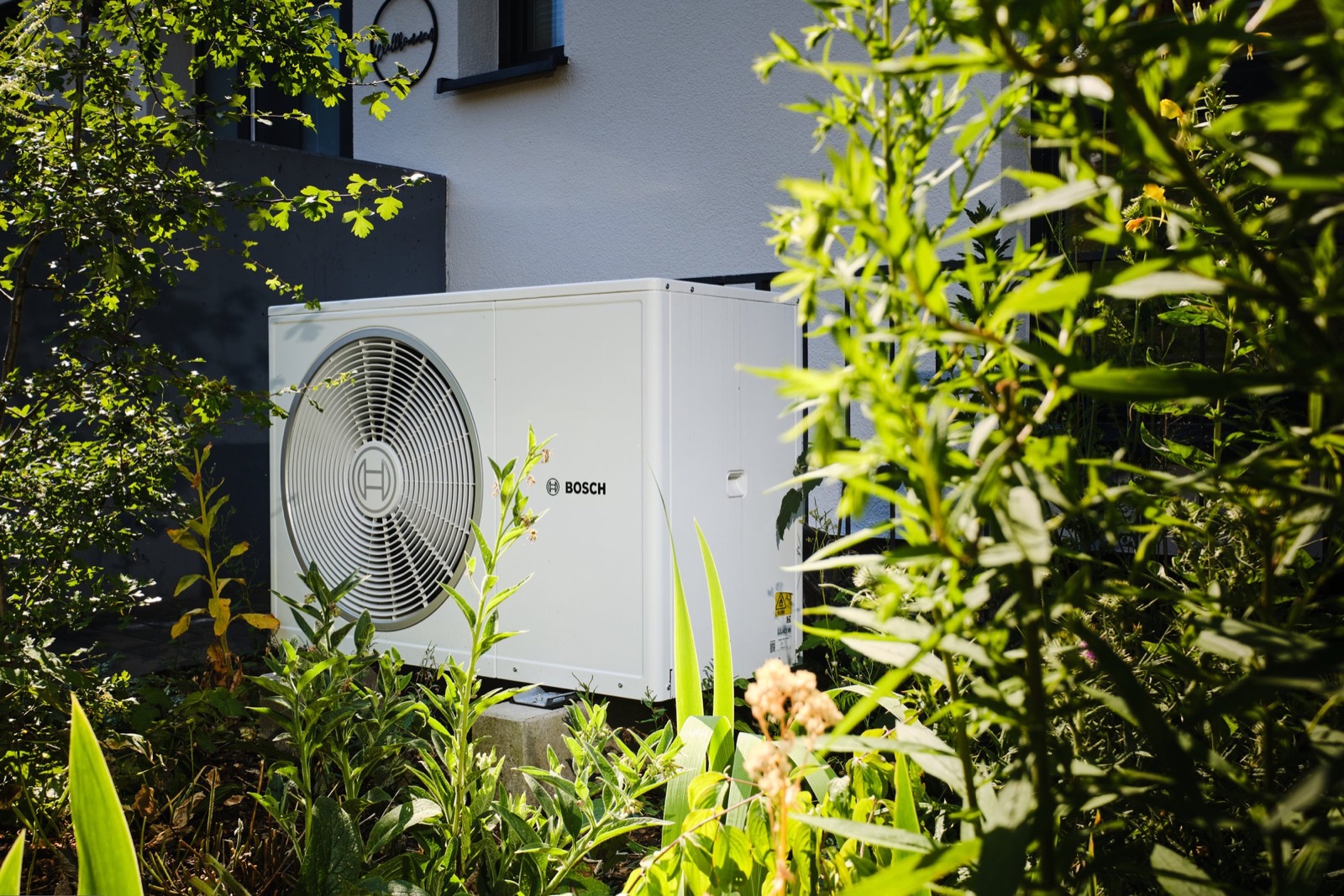
Here too, new builds have changed course. According to Destatis, 73.6 per cent of the residential buildings completed in 2025 are mainly heated by a heat pump. We explain how that works in a modular house in a separate article.
What this means for you
Statistics don’t build houses. But they show what matters when you plan: costs you know early on, and a build time that stays predictable.
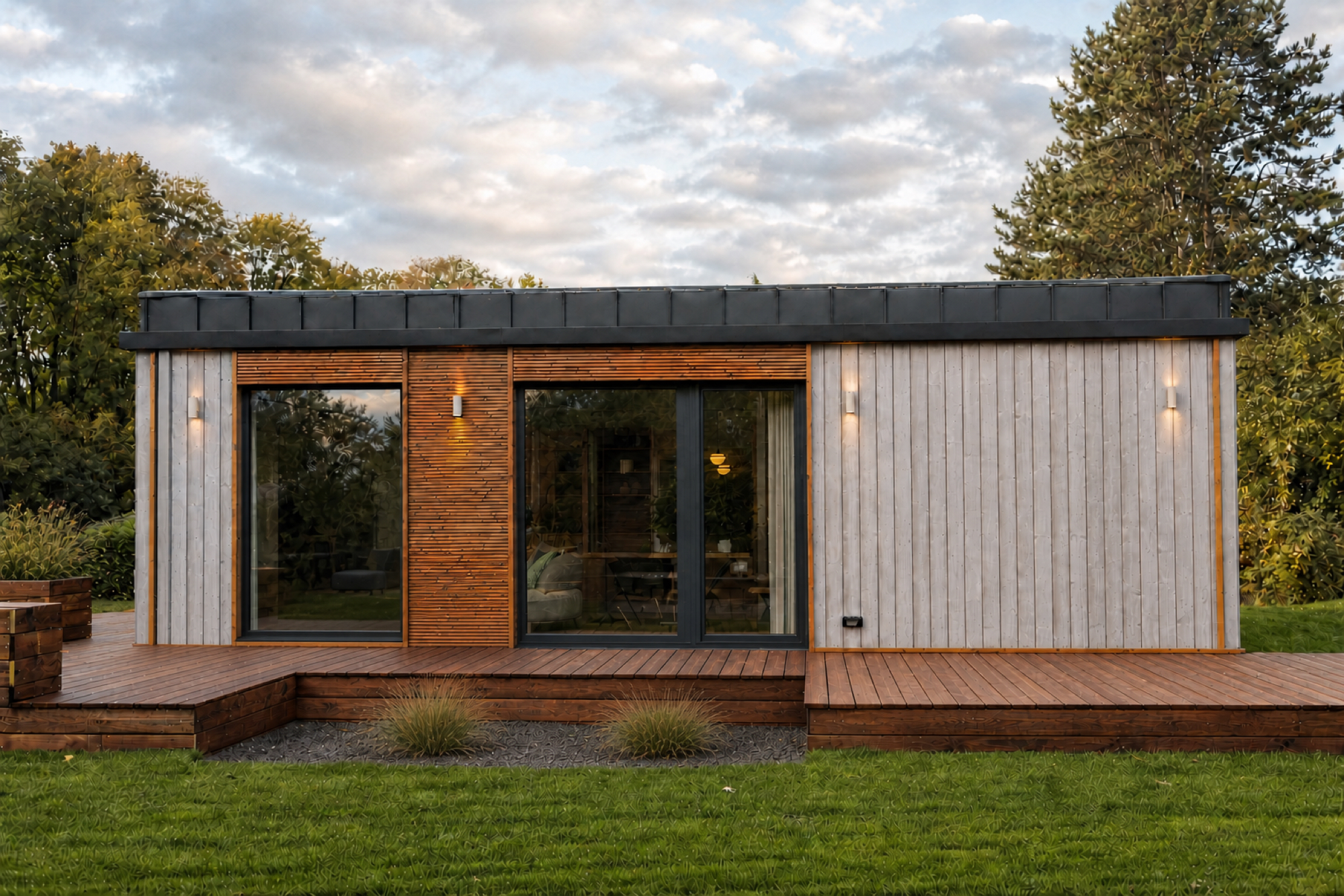
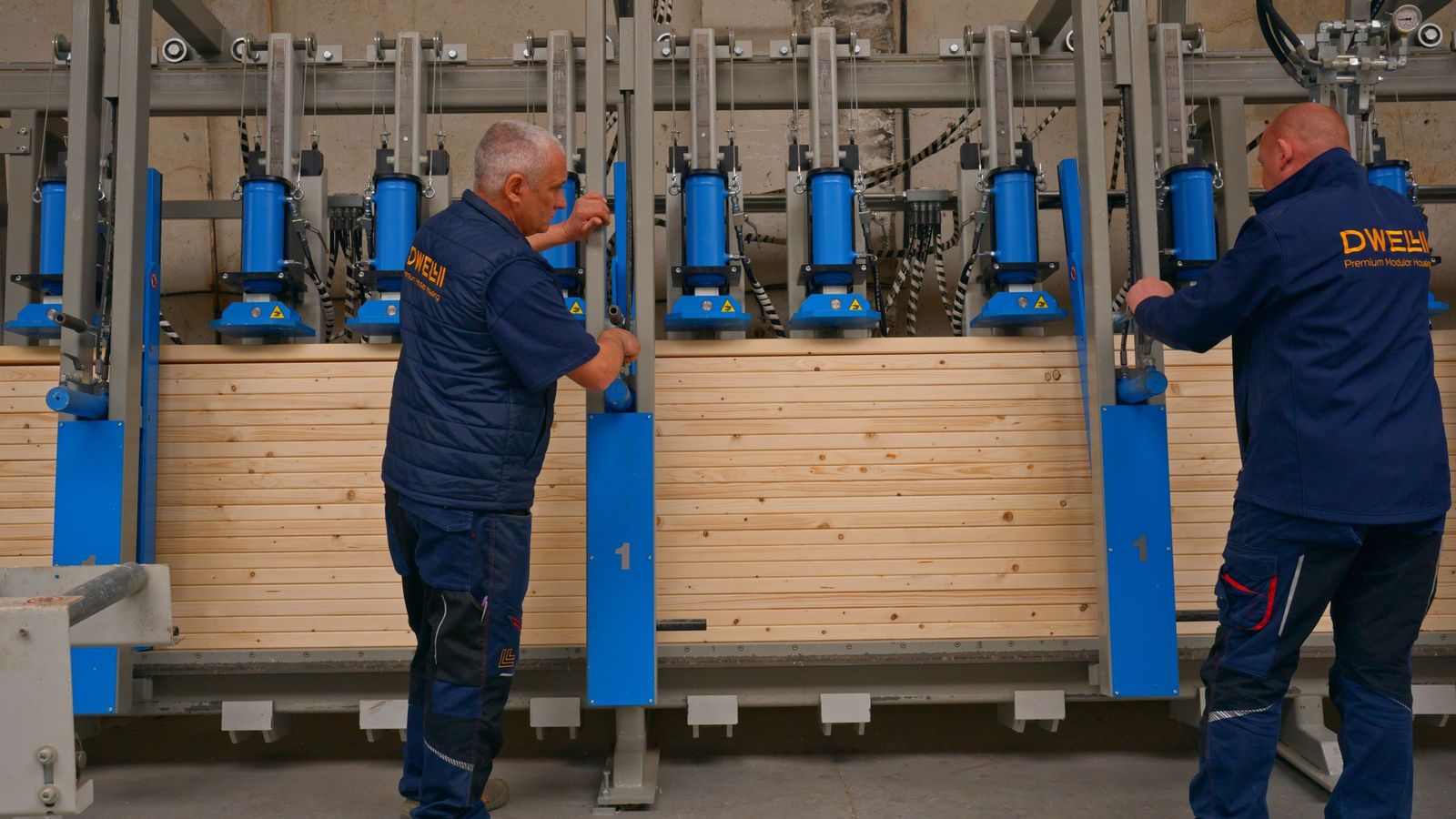
This is how we work: our modular houses are completely prefabricated and pre-assembled in our own factory, in timber-frame construction. The TR3M comes in three modules, the smaller houses TR01, TR02 and TR03 in two. On site, the modules are joined together. A fixed-price guarantee applies from contract signing; duration and conditions are set out in the contract. In our experience, delivery takes approx. six months from the building permit, and on-site assembly takes about a week. Both are figures based on experience, not promises, because when the permit comes through is up to the building authority. They can’t be compared with the 27 months in the statistics: Destatis counts from approval to completion of the entire building, while our delivery time applies to the house from the factory; foundation and connections come on top.
To see what a finished house like this looks like, visit the show house in Bad Vilbel.
Sources
- Federal Statistical Office of Germany (Destatis): press release no. 174 of 22 May 2026, “18,0 % weniger fertiggestellte Wohnungen im Jahr 2025”. https://www.destatis.de/DE/Presse/Pressemitteilungen/2026/05/PD26_174_31121.html (accessed 26 November 2026)
- Destatis: press release no. 402 of 18 November 2026, “Baugenehmigungen für Wohnungen im September 2026: -14,8 % zum Vorjahresmonat”. https://www.destatis.de/DE/Presse/Pressemitteilungen/2026/11/PD26_402_3111.html (accessed 26 November 2026)
- Destatis: press release no. 360 of 9 October 2026, “Baupreise für Wohngebäude im August 2026: +5,5 % gegenüber August 2025”. https://www.destatis.de/DE/Presse/Pressemitteilungen/2026/10/PD26_360_61261.html (accessed 26 November 2026)
- Destatis: press release no. N039 of 28 July 2025, “2024 wurden 15,5 % weniger Wohngebäude aus Fertigteilen errichtet als 2023”. https://www.destatis.de/DE/Presse/Pressemitteilungen/2025/07/PD25_N039_31.html (accessed 26 November 2026)
- Destatis: press release no. N038 of 10 June 2026, “Rund drei Viertel der im Jahr 2025 errichteten Wohngebäude heizen mit Wärmepumpen”. https://www.destatis.de/DE/Presse/Pressemitteilungen/2026/06/PD26_N038_31_51.html (accessed 26 November 2026)