Bungalow or two storeys: what really matters as you age
- 81 %
- of households with people aged 65+ have no step-free access to their home (Destatis, 2022)
- 68.5 m2
- living area per person in households aged 65+ (Destatis, 2022)
- 1 in 4
- people in Germany will be at least 67 years old in 2035 (Destatis)
At 55, stairs are a non-issue. You take them without thinking, even with a laundry basket in your arms. Whether you’ll still enjoy living on two floors in twenty years’ time is a question that rarely comes up by itself. Yet it’s one of the most important ones when you’re planning your next house.
The figures behind the question
Germany is getting older, and fast. According to the population projection by the Federal Statistical Office (Destatis), one in four people will be 67 or older in 2035. In 2024 it was still one in five. The baby boomer generation is retiring right now.
Most older people stay in their own homes, even into old age. In 2022, according to Destatis, only around 4 per cent of people aged 65 and over lived in a care facility or a residential home. So your home has to work for you for a long time.
That’s exactly where the problem lies. In 81 per cent of households with people aged 65 and over, there was no step-free access to their own home in 2022. Only 6 per cent said their home met all the usual criteria for low-barrier living: enough space in the kitchen and bathroom, wide doors and hallways, no steps or thresholds, a level-access shower. Destatis points out that these figures are based on self-assessment.
Lots of space, little used
A second finding surprises many people. Households whose main earner is at least 65 have an average of 68.5 square metres of living area per person. Among 45- to 64-year-olds it’s 54.8. People aged 65 and over who live alone even have 83.0 square metres on average. A good quarter of those aged 65 and over who live alone have 100 square metres or more.
There are reasons for this: the children have moved out, and according to Destatis, six in ten older people have lived in their home for more than 20 years. On top of that, in 2025 a good third of people aged 65 and over lived alone, and among those aged 85 and over, more than half.
But lots of space also means lots to heat, lots to clean and lots to maintain. And how often a day do you climb the stairs while you’re at it?
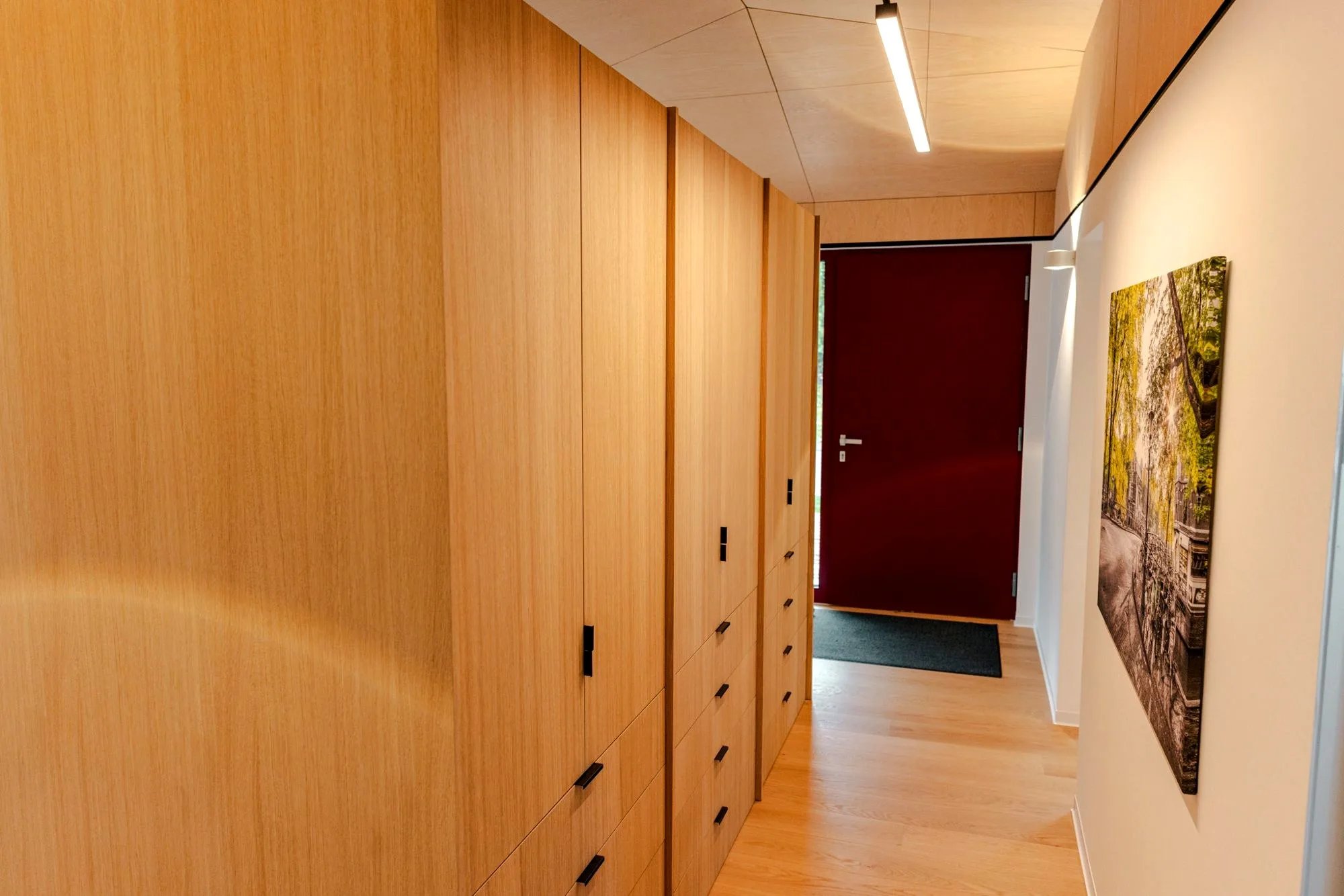
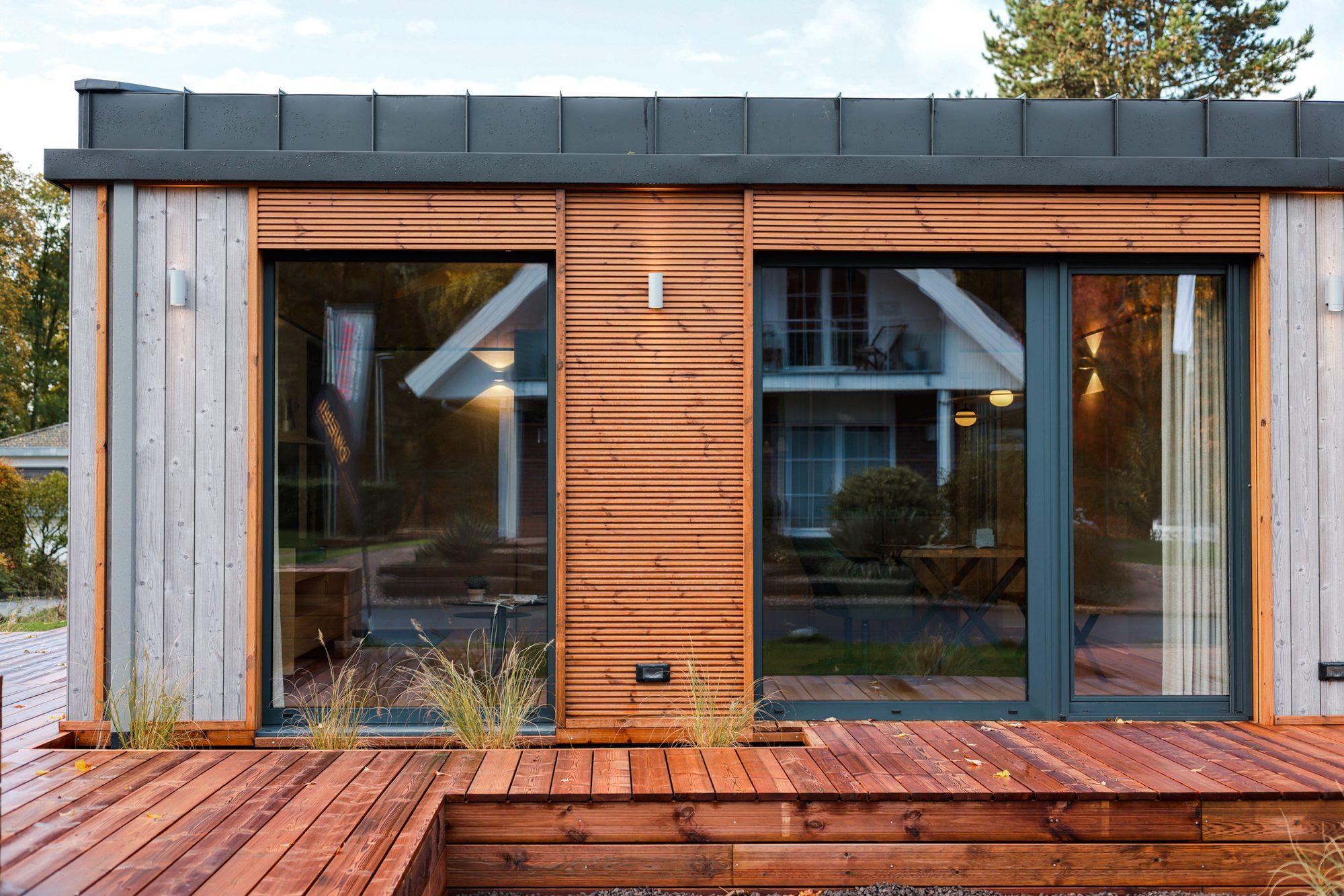
One level: In the TR3M, all the living spaces are on one level, with no stairs inside the house.
Whether you can get in without steps depends on the terrace or ramp that is built on your plot.
Five questions to ask before you decide
These five questions help you take an honest look at your everyday life. Take your time over them, ideally together with the people you live with.
- How often do you take the stairs today? Count them on a normal day: bedroom, bathroom, plant room, cellar.
- Where do you sleep, and where do you bathe? Are both rooms on the same level as the kitchen and living room?
- How many rooms do you really use? A guest room for two visits a year can be the most expensive room in the house.
- How much garden do you want to look after? A smaller garden is no sacrifice if it suits your everyday life.
- How do you get into the house? Steps in front of the front door count just as much as steps in the hallway.
The TR3M: everything on one level
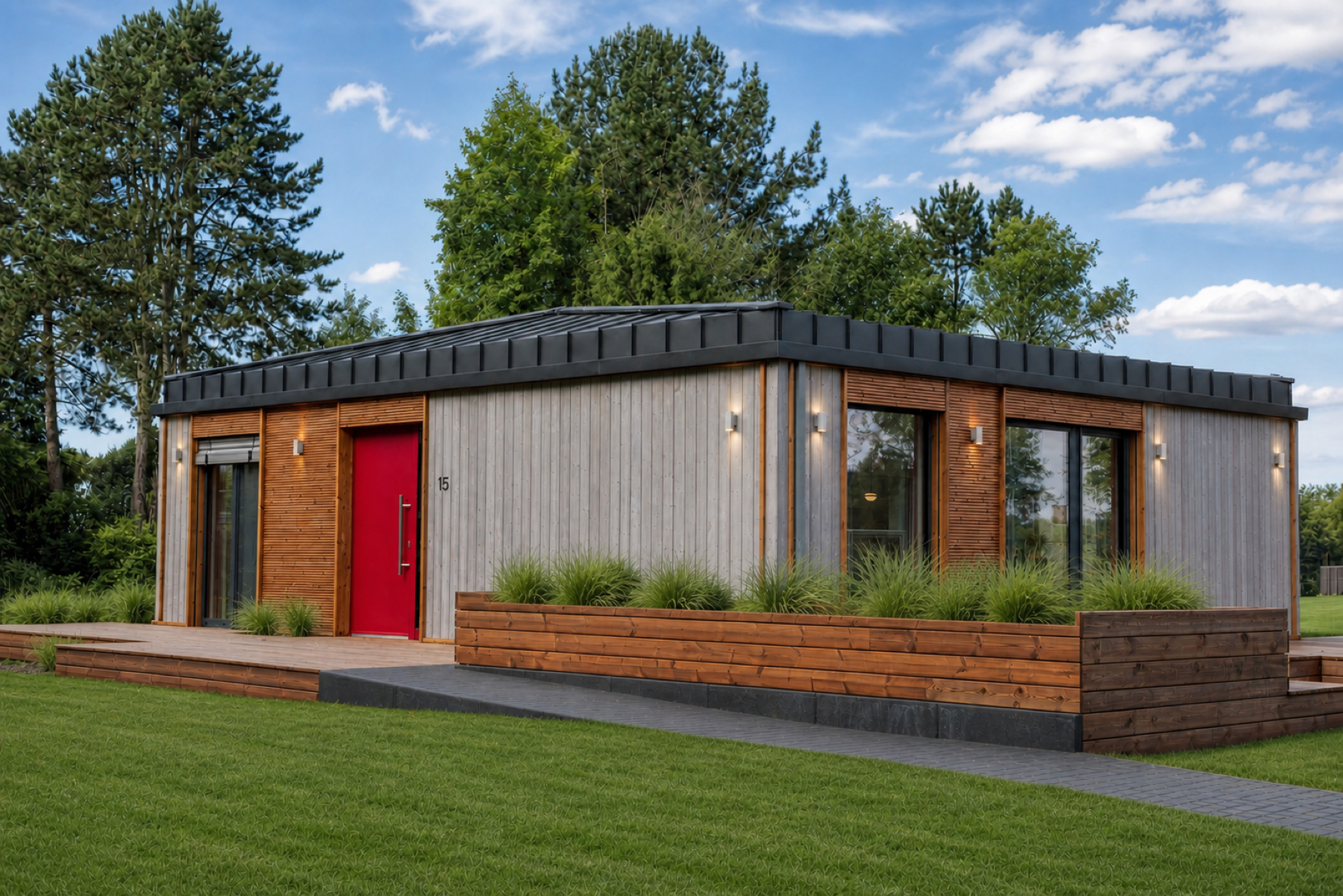
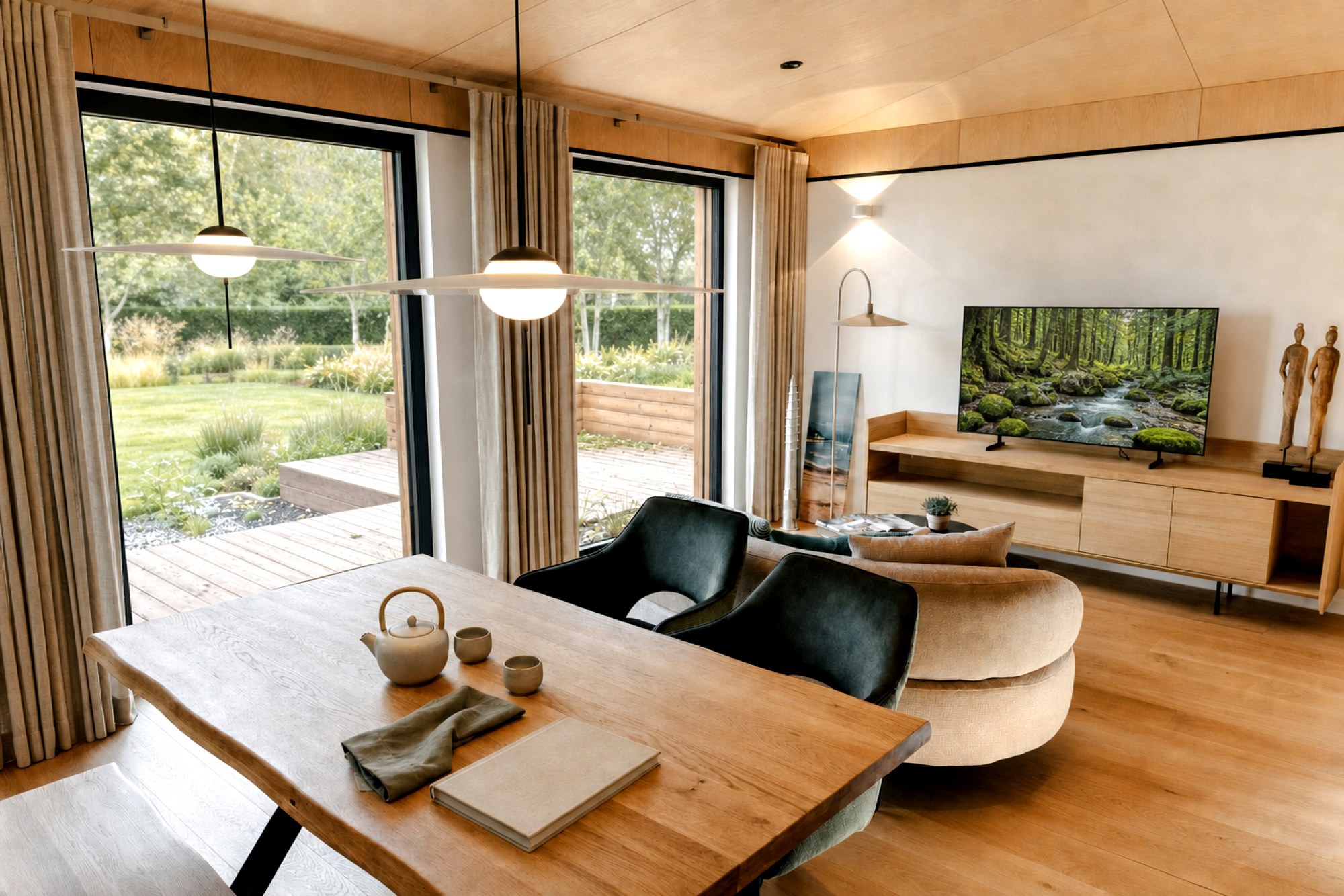
And this is where the TR3M comes in. It has a footprint of 86 m2, and all the living spaces are on one level: a large living and dining area with an open-plan kitchen area, two full-size bedrooms, a bathroom and a plant room. Mario puts it like this: “Everything on one level, everything as a bungalow.” There is room for two to four people.
In the bathroom, the standard specification includes a level-access walk-in shower with a frameless glass screen. The interior doors are 80 centimetres wide as standard; on request, we widen them to 90 centimetres. If you need more space, take a look at the TR3M XL: it has a footprint of 103 m2 (86 m2 living area).
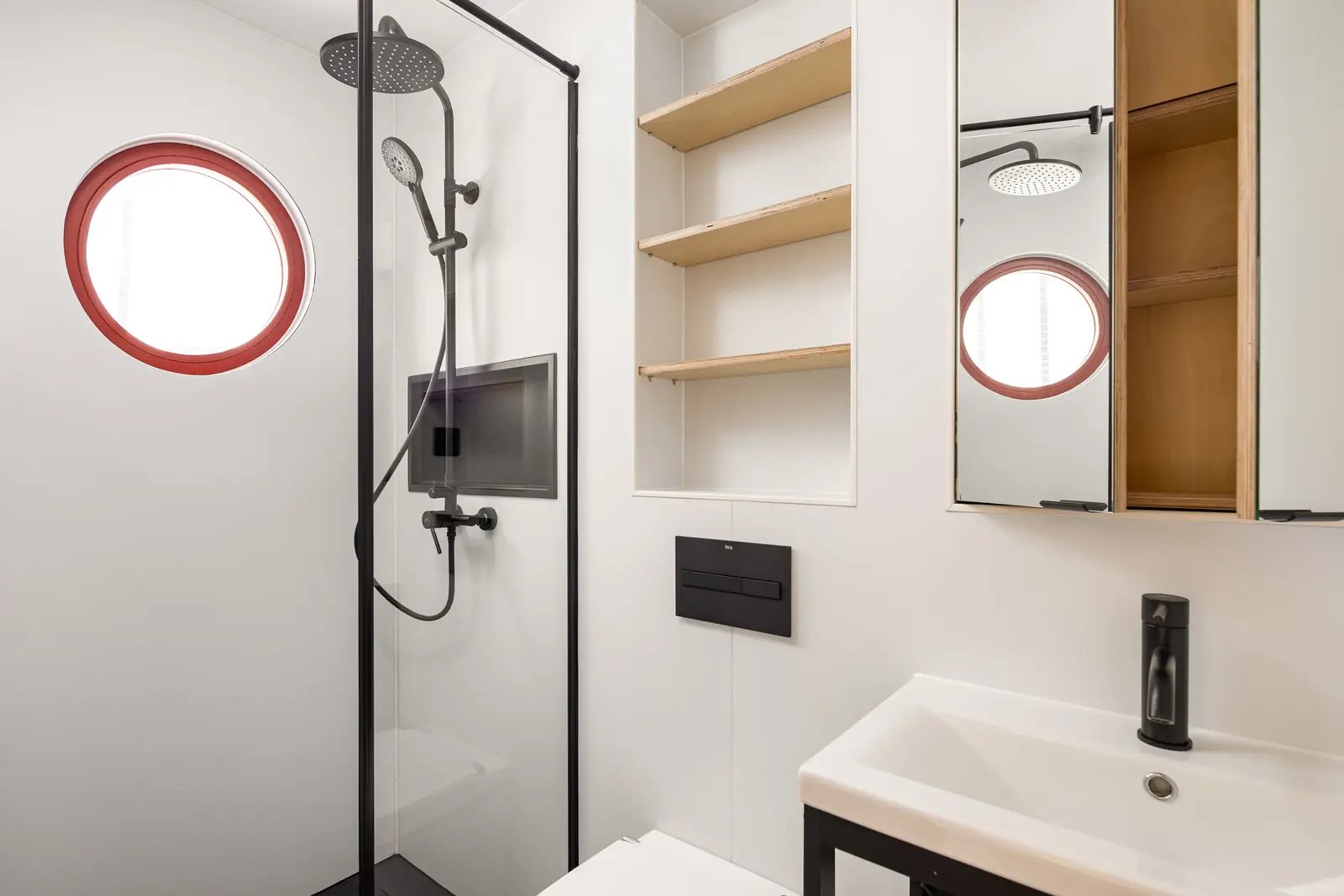
In the end, whether a bungalow suits you comes down to how it feels. You can try it out at the show house in Bad Vilbel: walk through every room, without a single stair inside the house.
Sources
- Statistisches Bundesamt (Destatis, Federal Statistical Office): press release no. 446 of 11 December 2025, “Bereits 2035 wird in Deutschland ein Viertel der Bevölkerung 67 Jahre und älter sein”. https://www.destatis.de/DE/Presse/Pressemitteilungen/2025/12/PD25_446_12.html (accessed 26 November 2026)
- Destatis: press release no. N051 of 28 September 2023, “In nahezu jedem dritten Haushalt in Deutschland leben ältere Menschen” (Mikrozensus 2022, Zusatzprogramm Wohnen: microcensus, supplementary housing survey). https://www.destatis.de/DE/Presse/Pressemitteilungen/2023/09/PD23_N051_12.html (accessed 26 November 2026)
- Destatis: press release no. N035 of 14 June 2023, “Haushalte der Altersgruppe 65+ haben pro Kopf den meisten Wohnraum zur Verfügung”. https://www.destatis.de/DE/Presse/Pressemitteilungen/2023/06/PD23_N035_12.html (accessed 26 November 2026)
- Destatis: press release no. N041 of 24 June 2026, “17,3 Millionen Menschen in Deutschland leben allein”. https://www.destatis.de/DE/Presse/Pressemitteilungen/2026/06/PD26_N041_12.html (accessed 26 November 2026)